
October 10, 2026


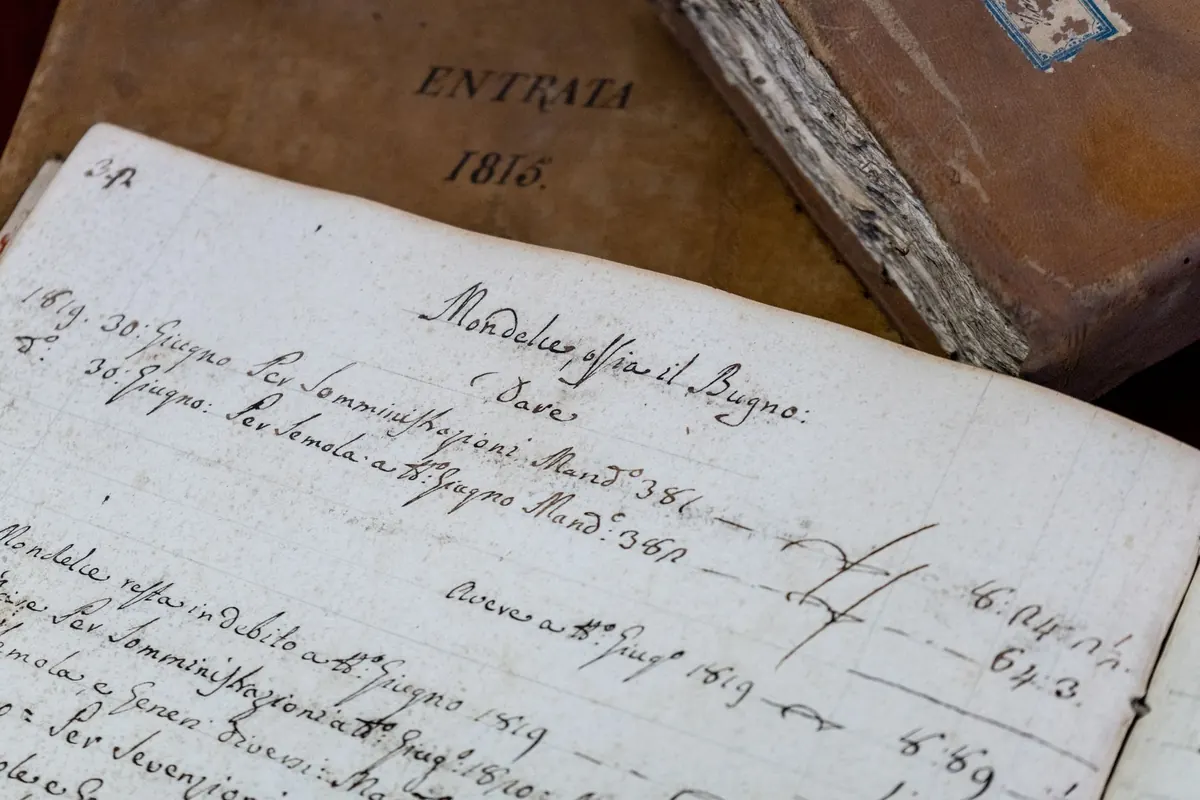
In 1851, a young man named Thomas Sims was seized in Boston and marched to a ship under armed guard, returned to the Georgia plantation he had fled. He had no jury, no lawyer of his own choosing, and no chance to speak in his own defense. The men who took him were not slave catchers working for a private bounty. They were federal officers executing a federal statute, and the law gave them almost no room to say no.
That statute was the Fugitive Slave Act of 1850. For the men who wore the badge of the U.S. Marshals, it created the hardest kind of professional problem: a legal duty that many of them believed was morally indefensible, backed by fines and personal liability if they refused.
Congress passed the Fugitive Slave Act of 1850 as part of the Compromise of 1850, and it was far more aggressive than the 1793 law it replaced. The earlier statute had left rendition largely to the states and had been undermined by Northern "personal liberty laws." The new version nationalized the process and put federal officers on the hook.
Its core provisions were blunt:
Read that last item again. A deputy's own finances, and sometimes his home and savings, stood behind the enforcement of a law he might find abhorrent. That is not a hypothetical pressure. It decided cases.
The Marshals Service is the oldest federal law enforcement agency in the country, created by the Judiciary Act of 1789. Its original job was unglamorous and essential: execute the orders of the federal courts. Serve the warrants, hold the prisoners, keep the courtroom secure, carry out the judgments.
That mission is precisely why the Fugitive Slave Act landed on marshals' desks. Rendition was framed as a federal judicial process. A claimant or his agent filed an affidavit, a commissioner issued a warrant, and someone had to execute it. In free states, where local sheriffs and constables were increasingly barred by state law from helping, the marshal was often the only officer in the room willing — or legally able — to act.
Step seven is where the images that still haunt American memory come from: a man or woman walked onto a ship or a train by armed federal officers while a city watched.
The statute paid commissioners ten dollars for a ruling that someone was a fugitive, and five dollars for a ruling that they were not. Congress never pretended the difference was an accident. Abolitionist newspapers called it a bounty on human beings, and the charge stuck precisely because the arithmetic was so plain.
Note what that incentive did to a proceeding already stripped of jury and testimony. The decision-maker's pay doubled if he ruled against the person in front of him. Whatever else the 1850 Act was, it was an object lesson in what happens when a system's financial design points in the same direction as its moral failure.
Enforcement did not go smoothly. In Boston in 1851, a crowd pulled Shadrach Minkins out of a courtroom and spirited him to Canada. That same year in Syracuse, a crowd freed a man known as Jerry from custody, and in rural Pennsylvania the Christiana Resistance left a Maryland slaveholder dead. In 1854, federal troops and Marines escorted Anthony Burns through the streets of Boston to a ship bound for Virginia, and Milwaukee abolitionists broke Joshua Glover out of jail.
The legal battles ran alongside the street battles. Prigg v. Pennsylvania in 1842 had already held that rendition was a federal matter, while suggesting states need not assist — a door Northern legislatures walked through with personal liberty laws. Ableman v. Booth in 1859 pushed back hard, affirming the 1850 Act's constitutionality and ruling that state courts could not interfere with federal custody. The war settled the question that the courts would not.
Historians have found marshals who enforced the law grudgingly, deputies who resigned rather than serve warrants, officers who slowed paperwork or chose the least aggressive way to make an arrest, and others who did the work with visible efficiency because they agreed with it. Both kinds of men existed in the same districts.
There is no comfortable lesson in that. Federal officers were asked to choose between their oath and their conscience, and the law deliberately made the oath expensive to break. Some paid. Some resisted. Some simply obeyed, and lived with it.
For anyone who studies or works in law enforcement, the Fugitive Slave Act is not a dusty curiosity. It is a case study in three durable problems.
First, discretion is real. Even a statute written to eliminate wiggle room left officers deciding how fast to move, how much force to use, and how thoroughly to search. Those choices shaped lives.
Second, incentives shape conduct. Fee structures, liability rules, and quotas change behavior more reliably than speeches about values do. Audit the incentives, not just the policy.
Third, paper trails outlast politics. We know what happened to Thomas Sims and Anthony Burns largely because federal officers generated warrants, certificates, and receipts. Careful records are how a bad era becomes a teachable one.
The Fugitive Slave Act was repealed in 1864, and the Thirteenth Amendment abolished slavery the following year. The badge, however, remained. Every generation of federal officers since has inherited the same question the marshals of the 1850s could not avoid: when the law and your judgment of what is right pull in different directions, what will you do, and who will know?
Photo: Donatello Trisolino / Pexels

An almanac for marshals and law enforcement..
Copyright © 2026 The Marshal Manac. All rights reserved. The Marshal Manac.